Showing posts with label Visiting Places. Show all posts

Petra

Friday, 10 August 2012

Petra (Greek "πέτρα" (petra), meaning stone; Arabic: البتراء, Al-Batrāʾ) is a historical and archaeological city in the Jordanian governorate of Ma'an that is famous for its rock-cut architecture and water conduit system. Established sometime around the 6th century BC as the capital city of the Nabataeans, it is a symbol of Jordan as well as its most visited tourist attraction. It lies on the slope of Mount Hor, in a basin among the mountains which form the eastern flank of Arabah (Wadi Araba), the large valley running from the Dead Sea to the Gulf of Aqaba. Petra has been a UNESCO World Heritage Site since 1985.

  Petra
  Petra
  Petra
 Petra
Read more ...

Dos Ojos

Monday, 6 August 2012

Dos Ojos (from Spanish meaning "Two Eyes"; officially Sistema Dos Ojos) is a flooded cave system located north of Tulum, on the Caribbean coast of the Yucatán Peninsula, in the state of Quintana Roo, Mexico. The exploration of Dos Ojos began in 1987 and still continues. The surveyed extent of the cave system is 82.0 kilometers / 51.0 miles and there are 28 known sinkhole entrances, which are locally called cenotes. Dos Ojos lies broadly parallel to and north of the Sac Actun cave system. Dos Ojos has remained in the top ten, if not the top three longest underwater cave systems in the world since its discovery in the late 1980s.

 Dos Ojos
 Dos Ojos
 Dos Ojos
Dos Ojos
Read more ...

Arc de Triomphe

Sunday, 5 August 2012

The Arc de Triomphe (Arc de Triomphe de l'Étoile) is one of the most famous monuments in Paris. It stands in the centre of the Place Charles de Gaulle (originally named Place de l'Étoile), at the western end of the Champs-Élysées. There is a smaller arch, the Arc de Triomphe du Carrousel, which stands west of the Louvre. The Arc de Triomphe (in English: "Triumphal Arch") honours those who fought and died for France in the French Revolutionary and the Napoleonic Wars, with the names of all French victories and generals inscribed on its inner and outer surfaces. Beneath its vault lies the Tomb of the Unknown Soldier from World War I.

Arc de Triomphe
 Arc de Triomphe
 Arc de Triomphe
 Arc de Triomphe
Read more ...

Notre Dame de Paris

Sunday, 29 July 2012

Notre Dame de Paris, also known as Notre Dame Cathedral or simply Notre Dame, is a Gothic, Roman Catholic cathedral on the eastern half of the Île de la Cité in the fourth arrondissement of Paris, France. It is the cathedral of the Catholic Archdiocese of Paris: that is, it is the church that contains the cathedra (official chair) of the Archbishop of Paris, currently André Vingt-Trois. The cathedral treasury houses a reliquary with the purported Crown of Thorns. Notre Dame de Paris is widely considered one of the finest examples of French Gothic architecture in France and in Europe, and the naturalism of its sculptures and stained glass are in contrast with earlier Romanesque architecture.

 Notre Dame de Paris
 Notre Dame de Paris
 Notre Dame de Paris
 Notre Dame de Paris
Read more ...

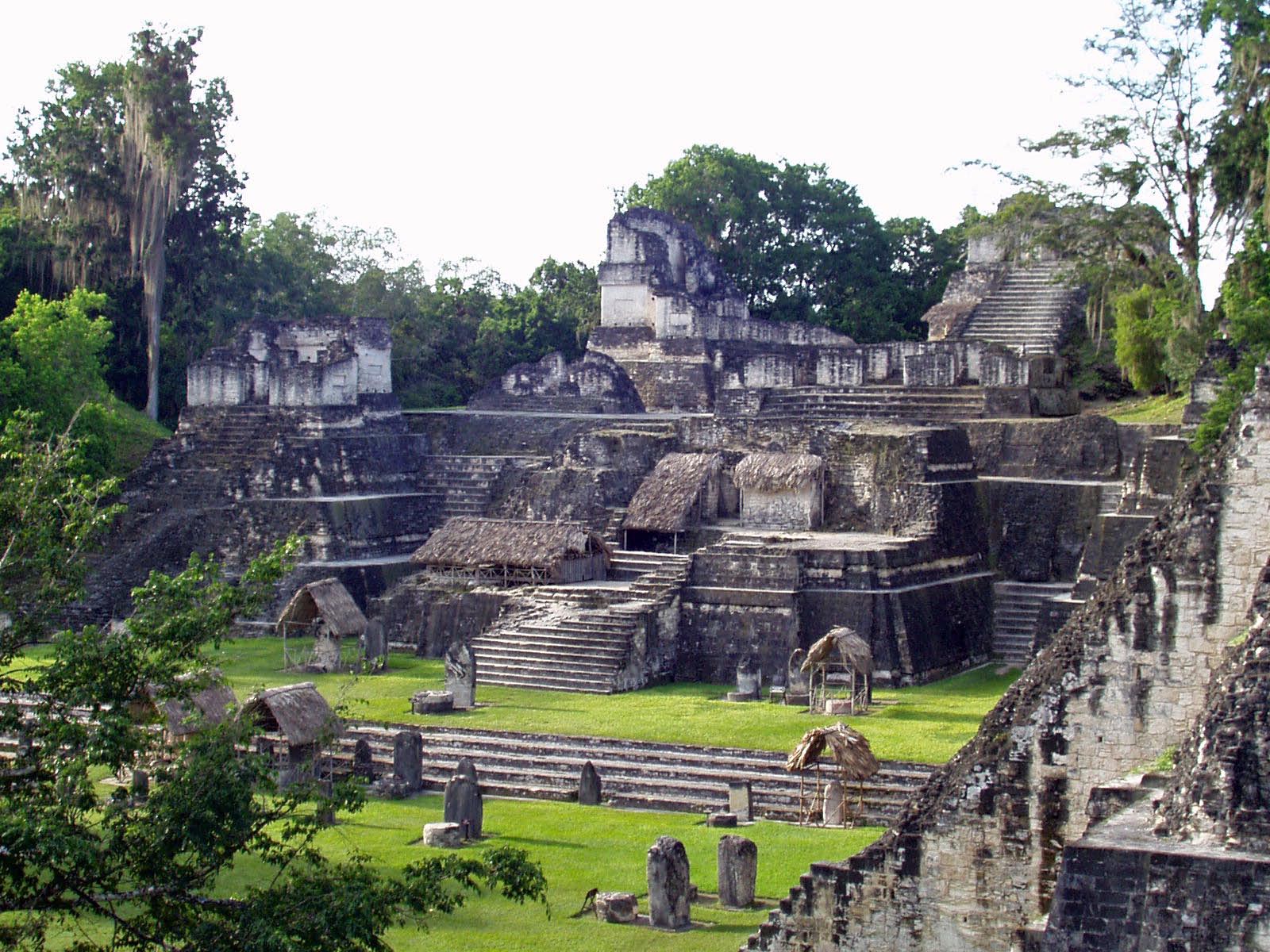
Tikal

Tikal (or Tik’al according to the modern Mayan orthography) is one of the largest archaeological sites and urban centres of the pre-Columbian Maya civilization. It is located in the archaeological region of the Petén Basin in what is now northern Guatemala. Situated in the department of El Petén, the site is part of Guatemala's Tikal National Park and in 1979 it was declared a UNESCO World Heritage Site. Tikal was the capital of a conquest state that became one of the most powerful kingdoms of the ancient Maya. Though monumental architecture at the site dates back as far as the 4th century BC, Tikal reached its apogee during the Classic Period, ca. 200 to 900 AD.

 Tikal
 Tikal
 Tikal
Tikal
Read more ...

Shangri-La

Friday, 27 July 2012

Shangri-La is a fictional place described in the 1933 novel Lost Horizon by British author James Hilton. Hilton describes Shangri-La as a mystical, harmonious valley, gently guided from a lamasery, enclosed in the western end of the Kunlun Mountains. Shangri-La has become synonymous with any earthly paradise but particularly a mythical Himalayan utopia — a permanently happy land, isolated from the outside world. In the novel Lost Horizon, the people who live at Shangri-La are almost immortal, living years beyond the normal lifespan and only very slowly aging in appearance. The word also evokes the imagery of exoticism of the Orient.

 Shangri-La
Shangri-La
Shangri-La
 Shangri-La
Read more ...

Huayna Picchu

Wednesday, 18 July 2012

Huayna Picchu also known as Wayna Picchu (Quechua: "Young Peak") is a mountain in Peru around which the Urubamba River bends. It rises over Machu Picchu, the so-called "lost city of the Incas" and divides it into sections. The Incas built a trail up the side of the Huayna Picchu and built temples and terraces on its top. The peak of Huayna Picchu is about 2,720 metres (8,920 ft) above sea level, or about 360 metres (1,180 ft) higher than Machu Picchu. According to local guides, the top of the mountain was the residence for the high priest and the local virgins.

 Huayna Picchu
  Huayna Picchu
 Huayna Picchu
Huayna Picchu
Read more ...

Machu Picchu

Machu Picchu  is a pre-Columbian 15th-century Inca site located 2,430 metres (7,970 ft) above sea level. Machu Picchu is located in the Cusco Region of Peru, South America. It is situated on a mountain ridge above the Urubamba Valley in Peru, which is 80 kilometres (50 mi) northwest of Cusco and through which the Urubamba River flows. Most archaeologists believe that Machu Picchu was built as an estate for the Inca emperor Pachacuti (1438–1472). Often referred to as the "City of the Incas", it is perhaps the most familiar icon of the Inca World.

 Machu Picchu
 Machu Picchu
 Machu Picchu
Machu Picchu
Read more ...

Skardu

Tuesday, 3 July 2012

Skardu, is the main town of the region Baltistan and the capital of Skardu District, one of the districts making up Pakistan's Gilgit–Baltistan.Skardu is located in the 10 km wide by 40 km long Skardu Valley, at the confluence of the Indus river (flowing from near Kailash in Tibet and through neighbouring Ladakh before reaching Baltistan) and the Shigar River. Skardu is situated at an altitude of nearly 2,500 m (8,200 ft).

 Skardu
 Skardu
 Skardu
Skardu
Read more ...

Kehwra

The Khewra Salt Mine (or Mayo Salt Mine) is located in Khewra, north of Pind Dadan Khan, an administrative subdivision of Jhelum District, Punjab, Pakistan. It is Pakistan's largest and oldest salt mine and the world's second largest. It is a major tourist attaction, drawing up to 250,000 visitors a year.[6][7] Its history dates back to its discovery by Alexander's troops in 320 BC, but it started trading in the Mughal era.

 Kehwra
 Kehwra
 Kehwra
 Kehwra
Read more ...

Tibet

Sunday, 1 July 2012

Tibet is a plateau region in Asia, north-east of the Himalayas. It is the traditional homeland of the Tibetan people as well as some other ethnic groups such as Monpas, Qiang, and Lhobas, and is now also inhabited by considerable numbers of Han and Hui people. Tibet is the highest region on earth, with an average elevation of 4,900 metres (16,000 ft). Tibet emerged in the 7th century as a unified empire, but it soon divided into a variety of territories.

  Tibet
  Tibet
  Tibet
 Tibet
Read more ...

London Eye

Tuesday, 26 June 2012

The London Eye is a giant Ferris wheel situated on the banks of the River Thames, in London, England. The entire structure is 135 metres (443 ft) tall and the wheel has a diameter of 120 metres (394 ft). It is the tallest Ferris wheel in Europe, and the most popular paid tourist attraction in the United Kingdom, visited by over 3.5 million people annually.

 London Eye
 London Eye
 London Eye
London Eye
Read more ...